



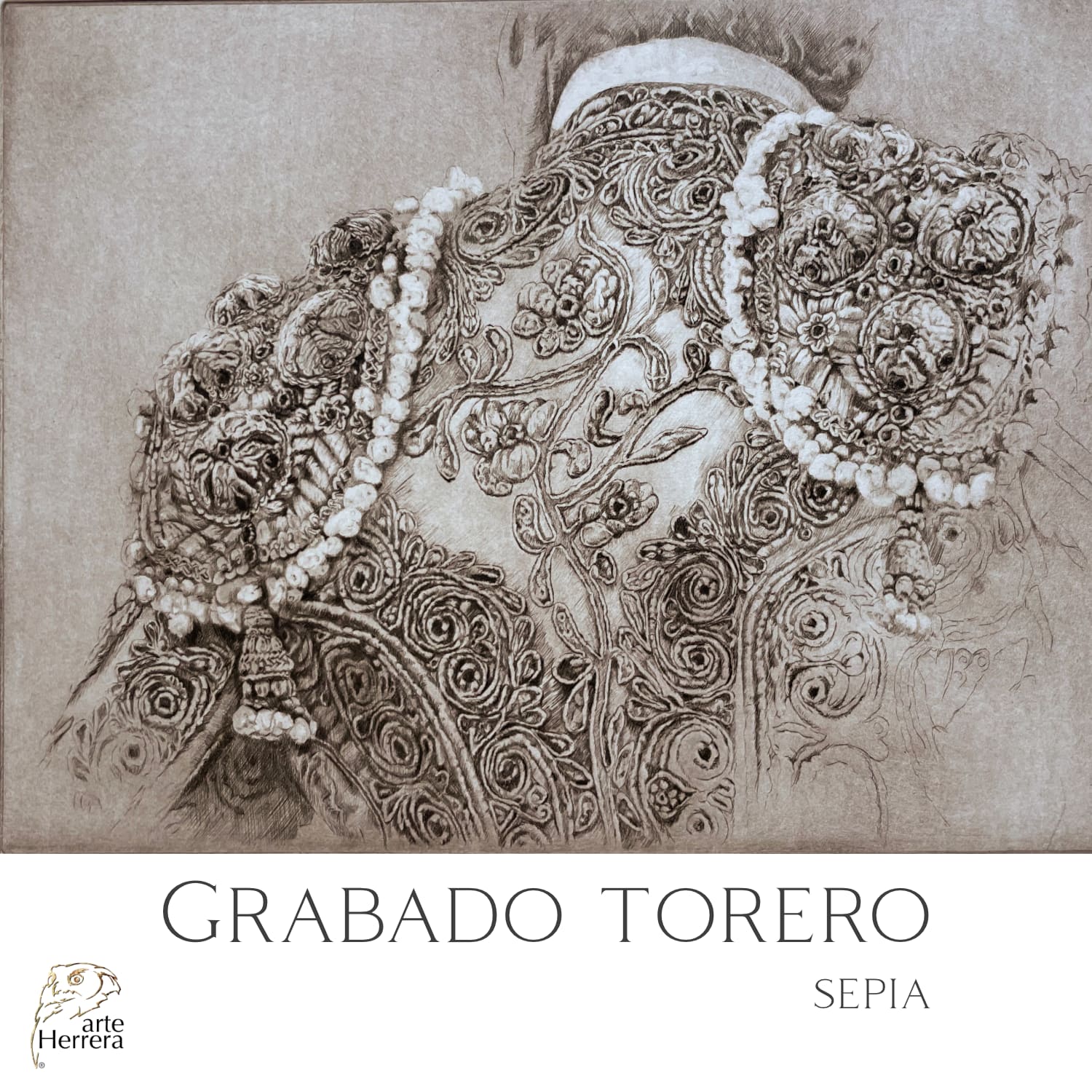
Bullfighter Engraving
450€
In stock
Product description
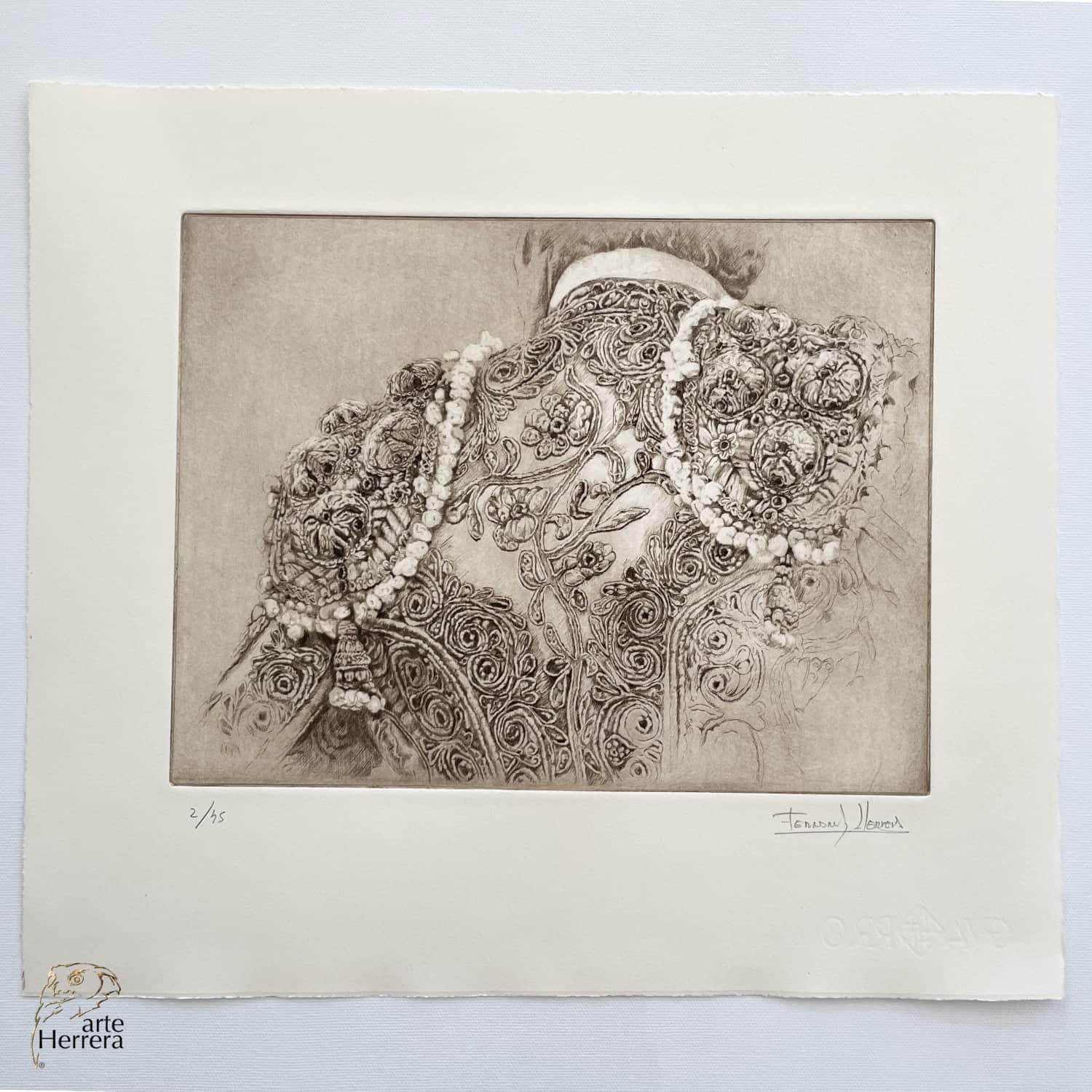
Limited and special series of bullfighter engraving in sepia in one ink.
45 copies
Spot size: 32.5cm x 24.5cm
Total paper size: 45cm x 38cm
Paper: GUARRO&CASAS
450€
In stock
Limited and special series of bullfighter engraving in sepia in one ink.
45 copies
Spot size: 32.5cm x 24.5cm
Total paper size: 45cm x 38cm
Paper: GUARRO&CASAS
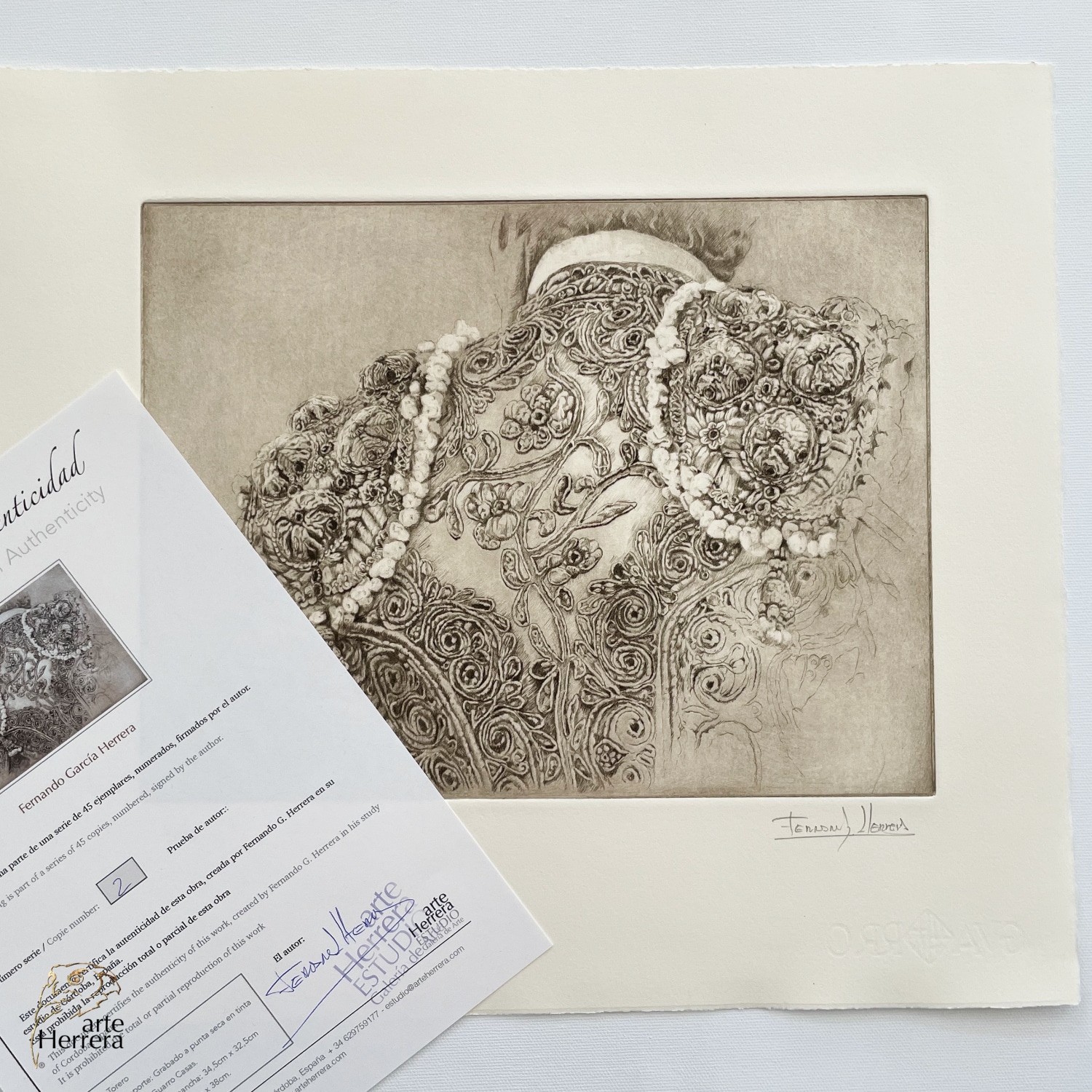
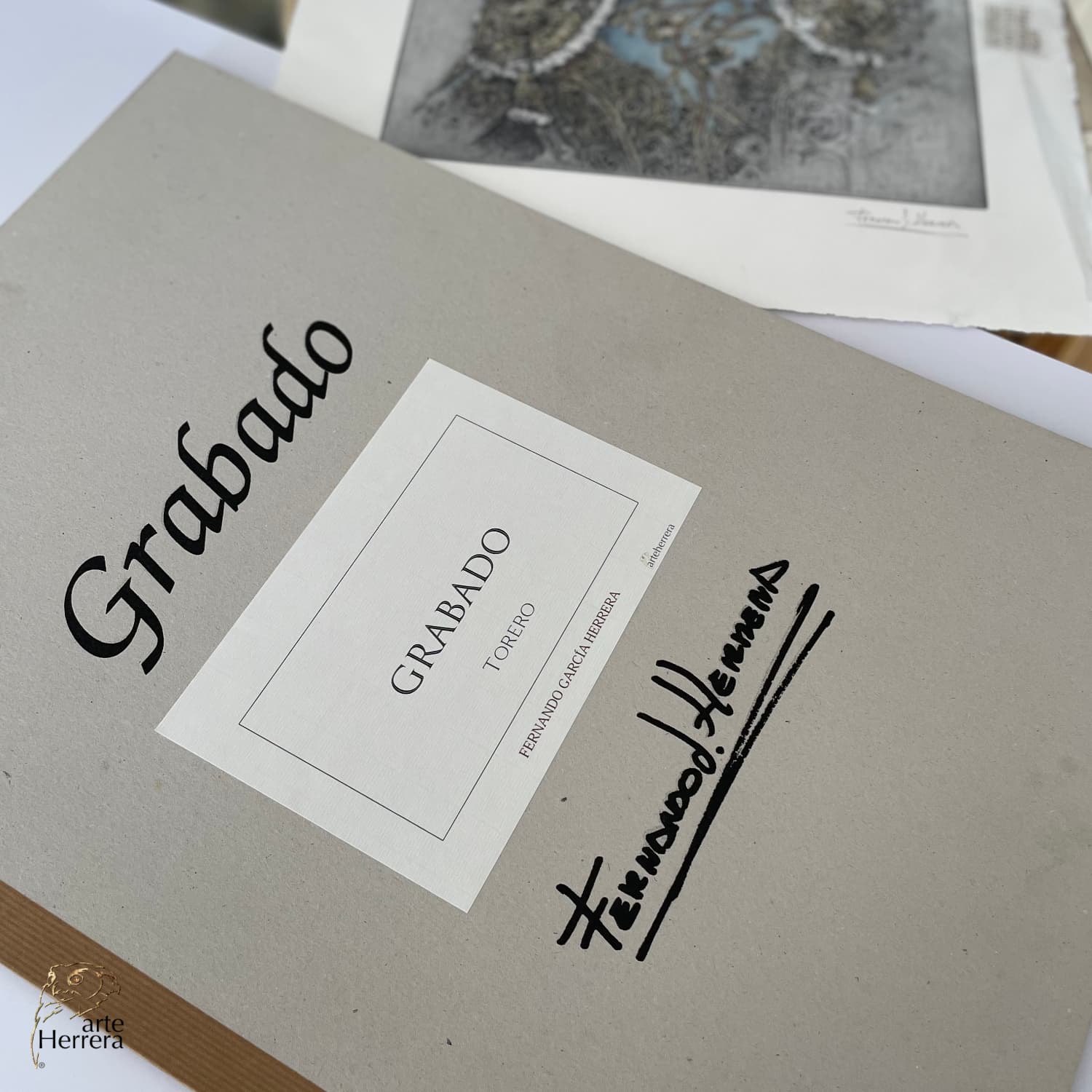
LIMITED EDITION numbered from 1 to 45.
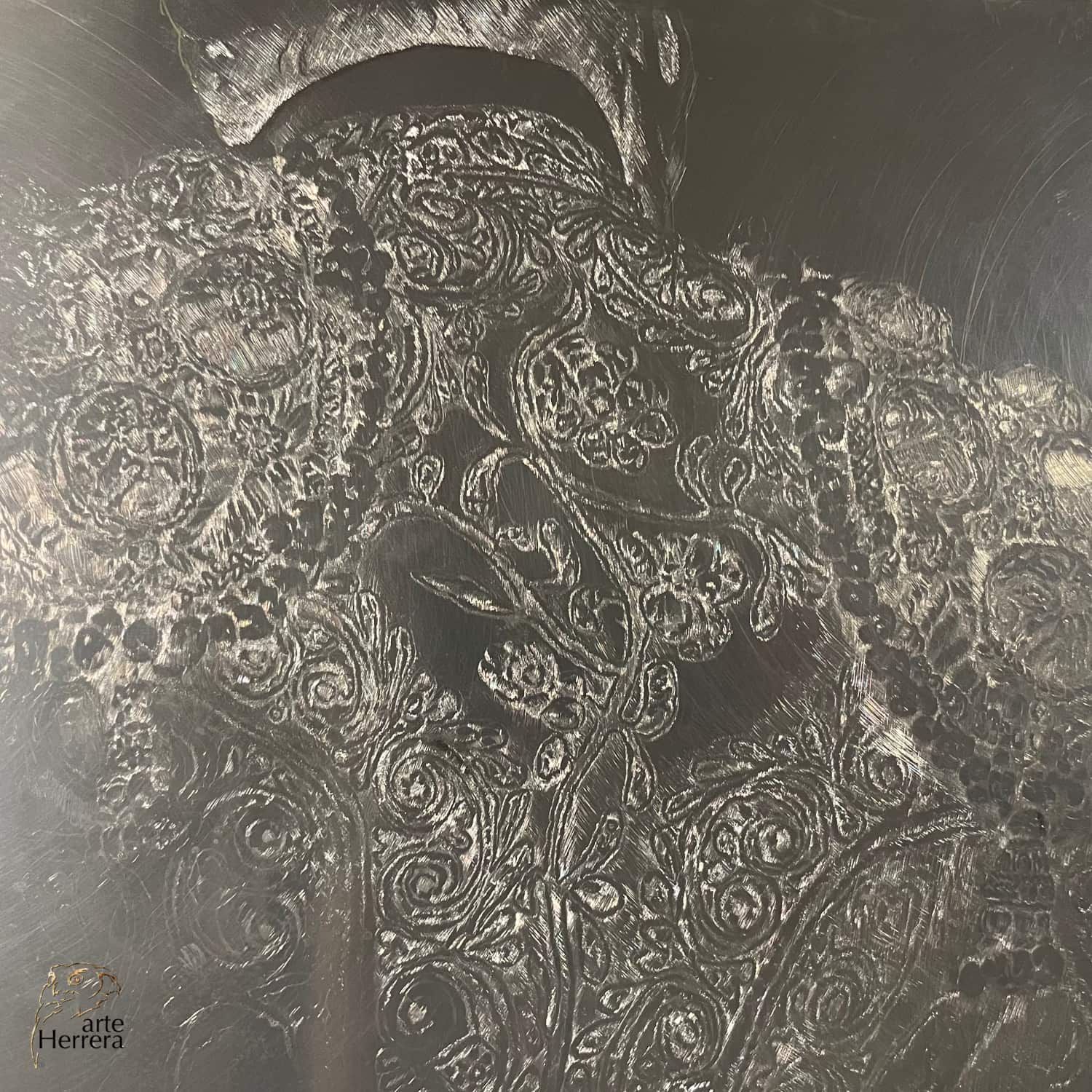
Original zinc plate carved by Herrera

Print made in the author’s own workshop, guaranteeing the strict and exclusive numbering of this engraving.
The engraving is delivered in a personalized rigid folder, which includes the engraving protected by a film, and the corresponding certificate.

About the colored series
Once the print has been made with black ink on special SENNELIER 100% fine-grain cotton watercolor paper of 300gr., Herrera colors one by one with the prestigious Schmincke watercolor brand. This makes each engraving, already artisanal and unique, even more exclusive and the quality of the materials used guarantees its conservation.
This engraving was sent to any destination in the world with protection conditions that guarantee its perfect delivery to the destination.
Learn more about drypoint engraving:
History
The technique has been known since the Renaissance, when it could be developed by the Master of the House Book, a casual name by which a still unknown painter and graphic artist is known who worked in southwestern Germany, near Mainz, between the centuries XV and XVI. Said artist produced with this technique, which until then was unknown. Drypoint was a technique of free expression in the 17th and 18th centuries, sometimes despised by editors given its lower profitability compared to the burin. Rembrandt was an enthusiast of it, compared to Dürer, who used it in three works. In the evolution of Rembrandt’s engraved work, drypoint was integrated into etching plates, in many cases coming to predominate over it and in others it ended up being the main technique of the plate. This aspect of drypoint complementing other procedures must be highlighted, given that its direct and emotional execution allows you to nuance, gently or highlight any engraving executed with another technique.
Technique
The artist draws the image on an untreated sheet of zinc, using an instrument that looks like a pencil, with a diamond tip, or simply sharpened metal. As the incision is made, a groove is produced, raising on both sides a kind of soft metal ridges called “burrs” or “burrs”. Burrs can occur on one side of the line or groove, or on both sides, depending on the angle of attack (inclination of the tip) with respect to the surface. If working at an angle of approximately 45°, the burr is made on the complementary angle. If you work at about 90°, the tip perpendicular to the surface, you will get burrs on both sides of the line.
These burrs retain a certain amount of ink and give the drypoint line a rich, velvety appearance. But if you want to give a firm and clear appearance, it is best to remove the burrs, without damaging the groove. The burrs are delicate and wear out with the continuous pressure of the press, which is why they do not allow print runs of more than 80 copies.
Stamping and drypoint printing is done by inking the sheet, cleaning it, placing a moistened paper on it and inserting it into the press/torculum.

Enter your details below to save your shopping cart for later. And, who knows, maybe we will even send you a sweet discount code :)
Podemos facilitar tu adquisición de rate más personalmente, a través de WhatsApp directo: +34629759177 / We can facilitate your rate purchase more personally, through direct WhatsApp: +34629759177
